
Independence Starts With a Safe Place: Why Basic Human Needs Come First
Independence sounds like a big, inspiring word. It brings to mind first apartments, first jobs, graduation photos, and young people stepping into their future with confidence. But for many marginalized youth, independence starts much earlier and much more practically: with a safe place to sleep, enough food, clean clothes, hygiene supplies, transportation, and one trustworthy person who knows what to do next.
That is why basic human needs support for marginalized youth is not a side issue. It is the foundation. Before a young person can focus on school, career planning, emotional growth, or long-term dreams, their body and nervous system need to know they are safe enough to learn.
Quick answer: safety comes before self-confidence
When basic needs are unstable, confidence can look like a personality problem when it is really a resource problem. A student who is hungry, worried about where they will sleep, or missing hygiene supplies may seem distracted, withdrawn, or inconsistent. What they may actually need is stabilization.
The Believe in Me Basic Human Needs pillar exists because youth empowerment must begin with real-world essentials. Independence is not built by telling kids to be resilient while their daily conditions remain unsafe.
Basic needs shape school outcomes
Housing instability, food insecurity, transportation gaps, and unmet health needs can interrupt attendance, concentration, homework, relationships, and participation. The National Center for Homeless Education has long documented how homelessness and housing instability affect students’ access to consistent schooling.
The point is not to reduce a young person to hardship. It is to recognize that learning does not happen in a vacuum. A student may be capable, creative, and motivated, yet still need practical support before those strengths can show up consistently.
Independence is not isolation
Sometimes adults talk about independence as if young people should need less help as they get older. But healthy independence usually grows through dependable support. Teens and young adults need guidance with paperwork, transportation, housing applications, food access, medical care, budgeting, conflict, and school transitions.
The approved reminder fits this work exactly: “Students should not have to already know the system to find their next step.” Basic needs support helps make the next step visible when stress has made the path feel impossible.
What basic needs can include
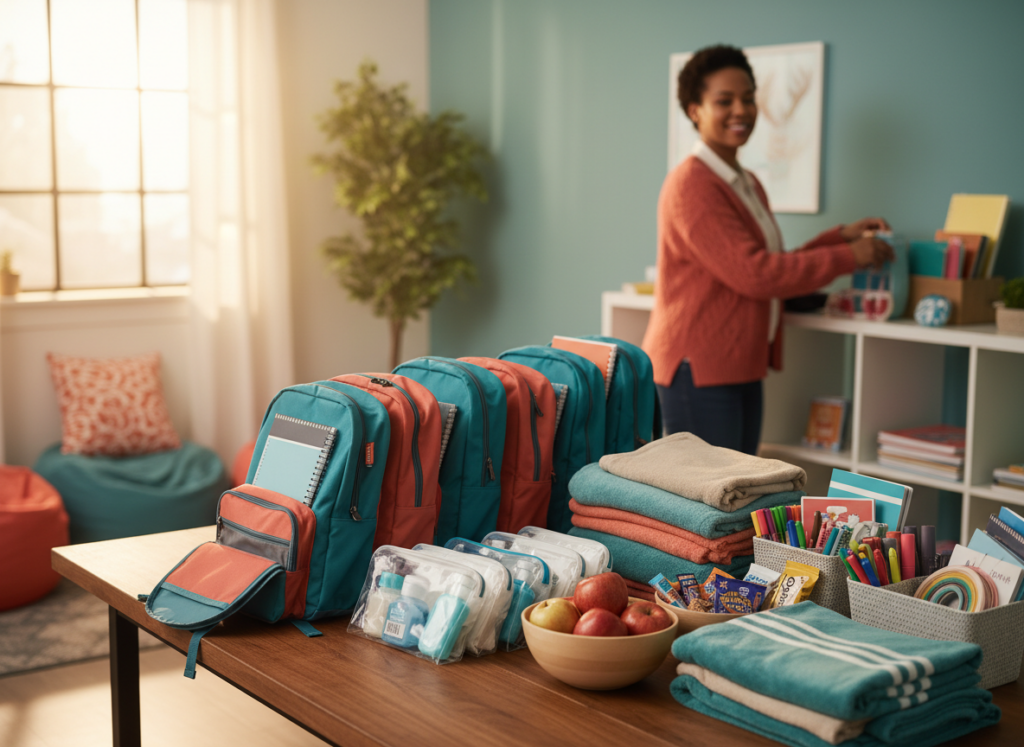
Basic needs may include safe housing, bedding, food, clothing, hygiene items, transportation, school supplies, medical or dental access, identification documents, technology access, and emergency support. For some youth, the right help is a grocery card. For others, it is a bus pass, winter coat, clean uniform, or a referral partner who can help with housing.
The common thread is dignity. Support should meet the need without shaming the young person for having it. A youth empowerment nonprofit should make help easier to access, not harder to ask for.
Why donors should care about practical support
Some donors are drawn to visible milestones: scholarships, performances, awards, graduations, and enrichment trips. Those moments matter. Still, many of them are made possible by less glamorous support that came first. A student cannot fully engage in a leadership program if they are cold, hungry, or afraid of losing housing.
Practical support protects the path to bigger outcomes. It helps youth stay connected long enough to benefit from education, enrichment, love and belonging, and community support. In other words, basic needs are not separate from confidence. They help make confidence possible.
Use support without exploiting pain
Basic needs stories must be handled carefully. Youth should never be turned into a fundraising symbol because they lacked housing, food, or safety. Ethical storytelling centers dignity, consent, context, and the systems that make support necessary.
That means talking about the need clearly without forcing a young person to perform gratitude or disclose trauma. Donors can understand urgency without being handed someone else’s private pain.
How partners can help
Schools, social workers, shelters, food banks, healthcare providers, transportation partners, and youth-serving nonprofits all see different parts of a young person’s life. Coordinated support matters because one organization rarely holds every solution.
Community partners can help by identifying gaps, making warm referrals, providing supplies, sponsoring emergency needs, or funding flexible support. The best partnerships reduce the number of times a young person has to retell their story to get help.
What independence can look like at different ages
For a younger child, independence may mean arriving at school with clean clothes, a full stomach, and supplies that do not set them apart from peers. For a teenager, it may mean having transportation to practice, a quiet place to study, or hygiene items that let them participate without embarrassment.
For a young adult, independence may mean replacing a lost ID, covering a short housing gap, buying work shoes, or getting help understanding a lease. These needs are practical, but they are also emotional. They tell a young person whether the community sees them as worth steady support.
Avoid the myth of deservingness
Basic needs support should not be reserved only for youth who can prove they are trying hard enough. Young people may respond to instability in ways adults misunderstand: missed appointments, silence, defensiveness, or inconsistent communication. Those behaviors can be signs of stress, not lack of potential.
A dignity-centered approach asks what barrier is present before judging motivation. It also keeps support flexible enough to meet real life instead of forcing every young person through the same narrow doorway.
A simple donor decision filter
When evaluating a basic needs gift, ask: Does this help a young person become safer, healthier, more stable, or more able to participate in school and community life? Does it protect dignity? Does it remove a practical barrier? Does it connect to a trusted partner or clear next step?
Those questions keep the gift grounded. They also help donors see that a bus pass, hygiene kit, meal, or emergency supply request can be a serious investment in long-term opportunity.
Build independence from the ground up
Independence does not begin at graduation. It begins when youth experience enough stability to imagine a future and enough support to move toward it. Basic needs support is one of the clearest ways to tell young people they are worth protecting before they are expected to perform.
Learn more about Basic Human Needs at Believe in Me, then choose one practical step: donate, volunteer, connect a community partner, or help fund the everyday essentials that make confidence possible.
FAQ: basic needs and youth empowerment
Is basic needs support the same as emergency charity? It can include emergency help, but it is bigger than that. It is a foundation for education, belonging, enrichment, and independence.
Why fund practical items instead of only programs? Practical items often make program participation possible. Stability is what allows youth to show up, focus, and grow.
One small gift can remove one big barrier
A basic-needs gift does not have to solve every problem to matter. Removing one barrier at the right time can keep a young person connected to school, a job, a mentor, or a safe adult.
That is why flexible support is powerful. It lets trusted partners respond to the specific need in front of them instead of waiting until a small barrier becomes a larger crisis.
Ready to take the next step?
Use this guide as a starting point, then choose one concrete way to move support closer to kids.