



Summer Enrichment Is More Than Fun: How Camps, Arts, and Sports Build Self-Confidence
Summer enrichment programs can look like simple fun: a basketball practice, a theater rehearsal, a painting session, or a week at camp. For young people facing poverty, trauma, isolation, or systemic barriers, however, these experiences can do something deeper. As a result, they create safe opportunities to try, belong, contribute, and discover a strength that may not appear in a classroom.
That is why enrichment belongs in a complete youth-support strategy. For example, Believe in Me includes Enrichment as one of its Five Pillars of Caring, alongside Basic Human Needs, Love and Belonging, Community Support, and Education. The goal is not to keep kids busy. It is to help remove access barriers so young people can build skills, relationships, identity, and confidence.
The short answer: enrichment creates practice grounds for confidence
Self-confidence grows through evidence. First, a young person attempts something, receives useful support, adjusts, and sees progress. Summer enrichment programs create repeated, lower-stakes chances for that cycle. For example, a missed shot becomes another practice. A blank canvas becomes an experiment. An unfamiliar trail becomes a challenge completed with peers.
As Julie Wukelic, MBA, CEO of Believe in Me, says, “Young people do not need to be rescued. They need communities willing to remove barriers, build belonging, and keep showing up.” Enrichment puts that principle into motion through consistent adults, welcoming peers, and meaningful activities.

Why summer enrichment programs matter for marginalized youth
Access to summer opportunities is not evenly distributed. For instance, participation can depend on fees, transportation, equipment, schedules, accommodations, or enrollment help. A program can be technically open and still remain practically out of reach.
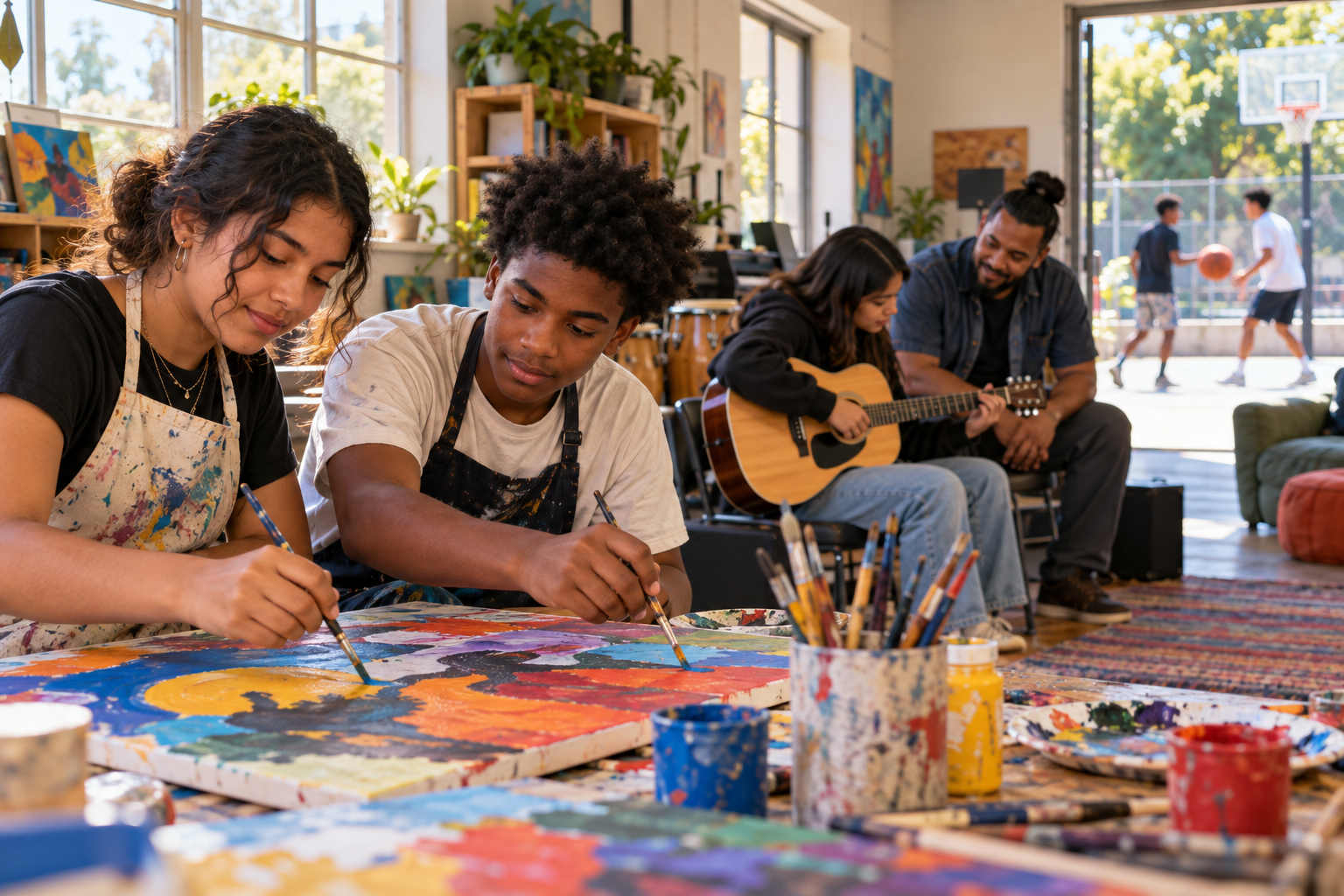
Believe in Me’s Enrichment Program framework names recreational activities, social connection, and adventure or exploration as ways to build self-esteem and community. In addition, its broader enrichment overview includes theater, music, sports, art, outdoor exploration, and gardening—different doors through which a young person may find competence and joy.
Removing a fee is important, but inclusive access may require transportation, adaptive equipment, translated information, meals, and predictable communication. Strong support asks not only whether a program exists, but whether a young person can enter, feel safe, and keep attending.





Sports turn effort into visible progress
For example, sports give young people immediate feedback. Practice changes what the body can do, and improvement is often visible to the participant. Then, a coach can connect preparation with progress while teaching teamwork, emotional regulation, and recovery after mistakes.
The Centers for Disease Control and Prevention says children and adolescents ages 6 through 17 should get at least 60 minutes of moderate-to-vigorous physical activity daily. It also notes that regular activity supports mental and physical health. The best youth programs make movement varied, age appropriate, and enjoyable—not a punishment or a test of worth.
Confidence-building sports environments emphasize learning and belonging. They offer fitting equipment, clear expectations, multiple roles, and coaches who praise specific effort. Winning can be exciting, but the durable lesson is that practice, feedback, and teamwork change what feels possible.


Arts help young people express what words cannot
Artistic activities create room for choice. A participant can select a color, shape a scene, interpret a character, or find a rhythm. Those decisions build agency: the experience of having an idea and making it real. In addition, the arts give young people a safer way to explore identity and emotion without requiring private disclosures.
A National Endowment for the Arts report found that childhood and adolescent arts participation is positively related to social-emotional attributes and academic outcomes. The research describes relationships rather than a guarantee for every child, but it supports a practical point: arts access can be part of healthy development, not an optional extra reserved for families with resources.
Camps combine challenge, belonging, and independence
Camp compresses many developmental experiences into a short period. Young people navigate routines, make choices away from familiar settings, solve problems with peers, and contribute to a group. With attentive staff and appropriate safeguards, those experiences can support independence without leaving a participant alone.
The American Camp Association’s National Camp Impact Study examined how camp experiences prepare young people for school, work, and life. Its research highlights transferable outcomes and the relationships and program conditions that help them develop. That nuance matters: simply attending camp is not magic. Program quality, safety, inclusion, and supportive relationships shape the experience.
However, strong programs must design belonging for marginalized youth rather than assume it. Staff need training, behavior expectations should be clear, and youth should have trusted ways to ask for help. A well-run camp communicates that each participant is part of the community before asking them to take healthy risks.

What a confidence-building program looks like
Look beyond a glossy activity list. A strong program can explain how staff create emotional and physical safety, welcome different abilities, respond to conflict, and communicate with caregivers. It should give youth genuine choices while maintaining dependable boundaries.
Ask whether young people have repeated opportunities to practice, receive feedback, and notice growth. One exciting afternoon can spark interest; confidence usually needs consistency. Programs should also avoid turning every activity into a competition. Collaboration, creativity, service, and exploration give more participants a meaningful way to succeed.
Finally, notice whose voice shapes the program. Youth feedback can reveal barriers adults miss, from transportation timing to a lack of culturally familiar activities. Listening is part of building an experience in which participants can belong.
How donors can support access without prescribing the experience
First, donors can fund the practical conditions that make participation possible: registration, transportation, supplies, equipment, meals, accessibility, trained staff, and scholarships. Flexible support can be especially valuable because the most urgent barrier may differ from one participant or partner to another.
In addition, good stewardship does not require publishing a child’s private story. Ask for aggregate participation information, appropriate program outcomes, and a clear explanation of how funds reduced barriers. A photograph or testimonial should never be the price of receiving support.
Frequently asked questions
What counts as a summer enrichment program? Camps, sports, visual and performing arts, music, outdoor exploration, clubs, gardening, STEM activities, and other structured experiences can all qualify. The defining feature is purposeful learning, connection, or exploration beyond basic supervision.
Do youth need to be talented before joining? No. Instead, well-designed programs welcome beginners and make growth visible. Prior experience should not become another access barrier.
How do enrichment activities build self-confidence? They give youth repeated chances to make choices, practice a skill, receive feedback, contribute to a group, and recognize progress. Supportive relationships help those experiences become a stronger sense of competence.
What should supporters ask before funding a program? Ask about safety, staff preparation, transportation, inclusion, youth voice, cost barriers, attendance, and how the program evaluates participation and growth without exploiting personal stories.

Help make room for discovery this summer
Ultimately, summer enrichment is more than entertainment because discovery is developmental work. A team, studio, stage, garden, or trail can become the place where a young person practices courage, finds dependable people, and sees proof of their own ability. Those experiences are strongest when basic needs, belonging, community support, education, and enrichment reinforce one another.
If you want to help, take one simple next step: explore Believe in Me’s Enrichment Program, then choose a way to donate, volunteer, or support the Five Pillars of Caring. Your contribution can help turn an inaccessible opportunity into a place where a young person can participate, persist, and grow.