





Food insecurity and education are closely connected. At the start of a school day, a reliable meal can make room for something ordinary and important: listening, joining in, and trying the next challenge. Food insecurity reaches beyond an empty stomach. In turn, uncertainty about having enough food can affect a young person’s routines, well-being, and opportunity to learn.
How does food insecurity affect learning? Research links limited or uncertain access to food with academic, behavioral, and emotional difficulties. However, those findings describe patterns across groups, not a diagnosis of any student. In practice, reliable meals, respectful relationships, and practical community support can help create steadier conditions for learning and confidence.
For Believe in Me, food access connects two of our Five Pillars of Caring: Basic Human Needs and Education. Our earlier story on food security and basic human needs explains why practical support matters. Likewise, the other pillars, Love & Belonging, Community Support, and Enrichment, matter too. Young people from birth through age 24 need support suited to their stage of life and circumstances.


What food insecurity means
The USDA defines food insecurity as limited or uncertain access to adequate food at the household level. For example, its measure covers a range: a family may have to trade away food quality or variety before anyone reduces how much they eat. By contrast, hunger is a possible individual consequence, measured differently.
In the USDA’s 2024 household food security report, published in 2025, children experienced food insecurity at times in 9.1% of U.S. households with children, or about 3.3 million households. However, the statistic counts households, not individual children, and it does not describe every local community the same way.

Food insecurity and education: what research says
A 2017 systematic review of 23 studies examined food insecurity alongside early cognitive development, academic performance, attention, behavior, and emotional outcomes. Across the studies, food insecurity and education emerged as connected concerns: limited food access was associated with difficulties from infancy through adolescence, even where researchers adjusted for some other factors. Still, the studies do not establish that a particular student’s grades or feelings are caused by food insecurity alone.
Food insecurity and education during the school day
Similarly, a 2022 systematic review of U.S. studies found frequent associations between food insecurity and child mental health and behavioral concerns. However, many included studies were cross sectional and had meaningful risks of bias or confounding, so the authors cautioned against simple cause and effect claims. For a young person, a steady meal and a trusted adult can be part of a supportive environment; neither is a stand-alone promise of an academic outcome.
The same issue looks different at different ages. Our guide to summer support after school ends describes how meals and trusted relationships can change when school routines pause. For example, a younger child’s access depends heavily on caregivers and early learning settings. Meanwhile, a teenager may navigate school schedules, transportation, and privacy concerns. For a young adult, work hours, housing costs, and campus or community resources may change what practical support looks like.

Food insecurity and education: where confidence fits
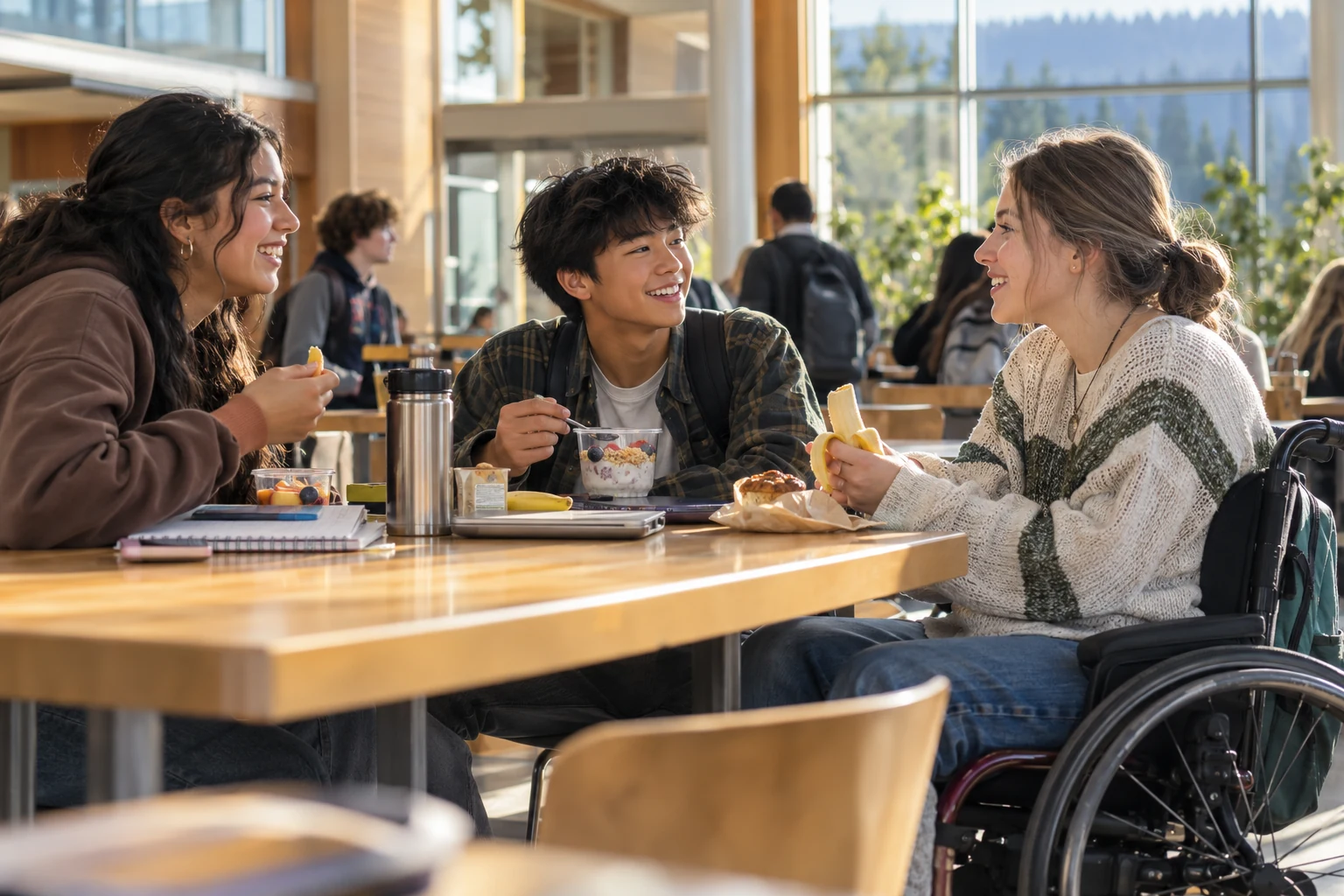
Confidence grows through repeated chances to participate, make choices, practice skills, and feel respected. Food insecurity and education meet here too: uncertainty about meals may complicate those chances when a young person worries about the next meal or avoids an activity that could expose their family’s situation. Even so, the research above supports concern about learning and emotional well-being; it does not measure a direct confidence gain from any one food program.
Small design choices matter. For example, offer food in a way that protects privacy. Then ask about dietary needs and preferences without assumptions. Finally, let young people help shape activities and enjoy them for their own sake. As a result, an effective response makes access feel ordinary and welcoming.

“A young person cannot thrive on encouragement alone, and they cannot thrive on resources without belonging. They need both.”
Julie Wukelic
CEO, Believe in Me

Food insecurity and education across the five pillars
Believe in Me’s Five Pillars of Caring offer a framework for planning with community partners. For that reason, these are examples of what partners can consider, rather than a claim that every activity is currently offered by Believe in Me.
1. Basic Human Needs
For example, make nutritious food accessible alongside essentials such as safe places, transportation, and supplies. Also ask families and young people what is useful and culturally appropriate.
2. Love & Belonging
Also, build meal and activity spaces where everyone is welcomed without labels, public eligibility checks, or pressure to tell a personal story.
3. Community Support
In addition, connect schools, food access organizations, mentors, and families so a young person does not have to navigate every resource alone.
4. Education
Next, coordinate practical support with attendance, tutoring, and future planning. Ask young people what helps them participate instead of treating a missed assignment as the whole story.
5. Enrichment
Finally, include choice, creativity, play, and leadership. A young person deserves opportunities to explore interests as well as to meet immediate needs.





Food insecurity and education: what families can do
Families and caregivers
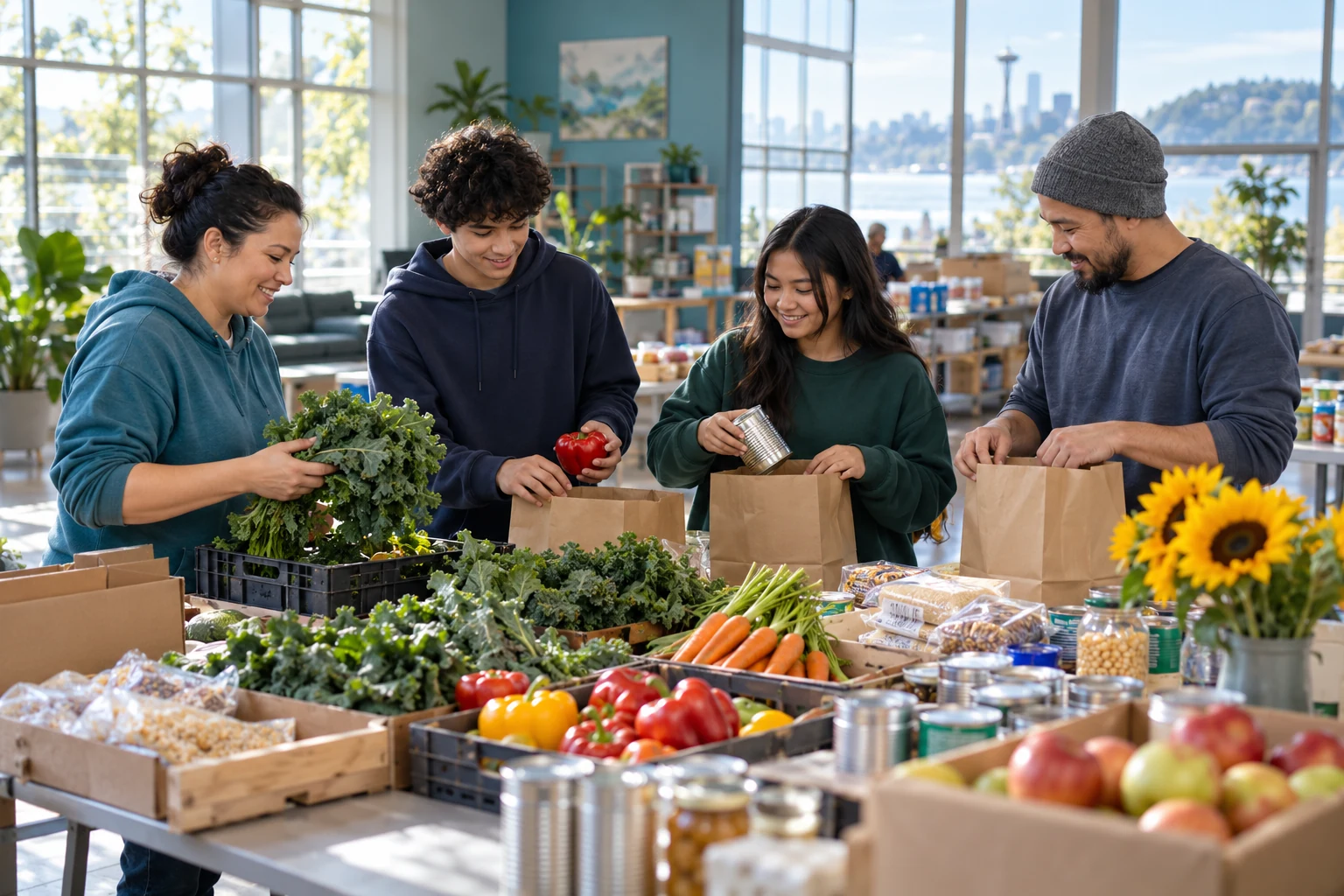
First, ask the school or district nutrition office which meals are available and how to apply where an application is needed. For example, Washington’s school meals application finder can help locate the right starting point. If a household faces an immediate gap, ask a local trusted service provider about current food resources.
Schools and youth-serving organizations
Make enrollment and referrals discreet, offer information in useful languages and formats, and check whether transportation or schedule barriers affect access. In addition, let young people describe what they need without requiring them to share private details in a group.
Donors and community partners
Ask prospective partners what capacity they need, such as food purchasing, storage, outreach, or coordination. Then set a simple learning plan: Was access easier? Did young people feel respected? Could they participate consistently? Those measures can guide improvement without turning a person’s story into a fundraising requirement.
Help make reliable support possible
Addressing food insecurity and education together can open space for learning. In turn, relationships and community support help keep that space open. Together, Believe in Me brings donors, volunteers, and youth-serving partners together around practical needs, belonging, education, and opportunity.
Have a partnership idea? Start a conversation with Believe in Me.
Questions about food insecurity and education
Studies associate food insecurity with academic, attention, behavioral, and emotional difficulties. Many factors shape a child’s learning, so the research does not diagnose an individual student. Reliable food access and respectful support can help create steadier conditions for participation.
USDA measures food insecurity as a household’s limited or uncertain access to adequate food. Hunger is an individual physical experience that can result when food access is severely limited. Food insecurity can be present before a child reports hunger.
Rules differ by school and program. Some schools provide meals to all students, while others use applications or direct certification. Ask your district nutrition office and check Washington OSPI’s school meals application finder for current instructions.
There is no guarantee. Confidence develops through many experiences, including choice, trusted relationships, and opportunities to learn. Food support can remove a practical barrier and should be delivered with dignity and attention to belonging.
Research and references on food insecurity and education
- U.S. Department of Agriculture, Economic Research Service. Household Food Security in the United States in 2024 (report summary, December 2025).
- U.S. Department of Agriculture, Economic Research Service. Definitions of Food Security (updated 2026).
- Shankar P, Chung R, Frank DA. Association of Food Insecurity with Children’s Behavioral, Emotional, and Academic Outcomes: A Systematic Review. Journal of Developmental & Behavioral Pediatrics (2017).
- Cain KS, et al. Association of Food Insecurity with Mental Health Outcomes in Parents and Children. Academic Pediatrics (2022).
- Washington Office of Superintendent of Public Instruction. Washington School Meals Application Finder.
Reviewed September 24, 2026. Research findings are population-level associations and do not describe Believe in Me program outcomes.