
A young person cannot plan confidently for graduation, college, work, or independence if basic needs, trusted relationships, records, transportation, and belonging are still uncertain. Education support matters. It works better when the rest of life is not left out.
A quick answer for supporters
Young people in foster care need more than encouragement to “stay focused.” They need stable basic needs, trusted relationships, coordinated community support, education access, and enrichment opportunities that let them explore who they are beyond paperwork, crisis, or transition.
Believe in Me organizes that support through the Five Pillars of Caring: Basic Human Needs, Love & Belonging, Community Support, Education, and Enrichment Programs.
Why this matters now
The Children’s Bureau’s National Foster Care Month campaign focuses on engaging youth, building supports, and strengthening opportunities. That framing matters because young people preparing to leave foster care need more than a single service or one-time gesture. They need adults and organizations willing to make the next step easier to reach.
Help remove barriers before they become setbacks.
Your gift can help Believe in Me support youth empowerment work through practical, dignity-centered programs and partnerships. Donations to Believe in Me are tax-deductible to the extent permitted by law.
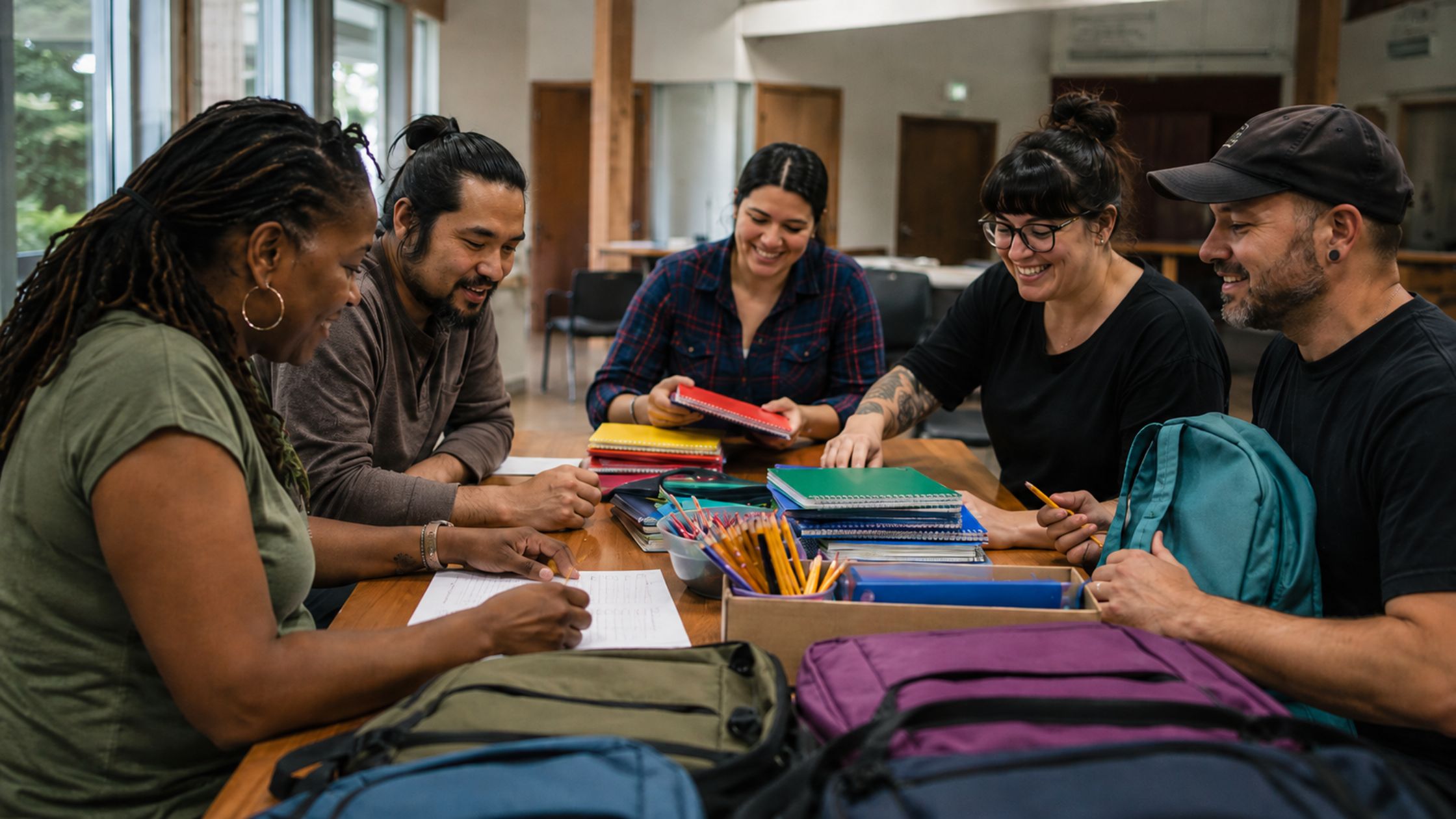
School success starts before the classroom
Graduation photos, college decisions, and career plans can make the future look straightforward from the outside: study hard, finish strong, choose the next step. For a young person in foster care, the next step may be shaped by quieter questions.
Where am I sleeping this month? Can I get to school tomorrow? Who has my records? Who can help me replace an ID, pay an application fee, find transportation, or understand financial aid without making me repeat my hardest story?
Those questions are not distractions from education. They are the conditions that make education possible.
Federal education resources for students in foster care emphasize the need for education agencies and child welfare agencies to coordinate around school stability, enrollment, records, transportation, and support. In plain language: adults need to make the system easier to navigate so young people are not left carrying every adult responsibility alone.
Washington education guidance also notes that students with foster care experience may arrive at college in survival mode, focused first on housing, food, transportation, health care, and financial aid. That is why a checklist built only around school supplies is not enough.
The Five-Pillar checklist for supporting young people in foster care
This checklist is not a replacement for a case plan, school plan, counseling, legal advice, financial aid guidance, or the young person’s own voice. It is a practical way for supporters to ask better questions, fund real gaps, and work through trusted partners while protecting privacy and dignity.
“Young people deserve support systems that honor their privacy, their agency, and their potential.”
Julie Wukelic, CEO, Believe in Me
1. Basic Human Needs: make stability real
A young person cannot fully focus on attendance, homework, applications, interviews, or long-term planning while worrying about food, clothing, hygiene, medication, documents, transportation, or a safe place to sleep.
Supporter checklist: Is there a safe and stable place to stay? Are food, hygiene supplies, weather-appropriate clothing, documents, and transportation covered? Does the young person have the technology and internet access needed for school, work, and appointments? Are small costs such as a replacement ID, bus pass, backpack, or application fee becoming big barriers?
2. Love & Belonging: protect connection
Belonging is not a soft extra. It is part of how young people stay grounded while placements, schools, plans, and adult roles change. Support can include trusted adults, sibling connection when appropriate, caregiver encouragement, culturally affirming relationships, and ordinary rituals that say: you matter here.
Supporter checklist: Who is the young person’s safe adult? Are sibling and family connections being honored when appropriate? Does the young person have spaces where they are known for strengths, interests, humor, culture, and goals, not only for paperwork or need?
3. Community Support: coordinate the adults and logistics
Many barriers are logistical before they are motivational. Transportation falls through. Records are delayed. A referral requires a document that no one has. A school, caregiver, caseworker, CASA/GAL volunteer, counselor, youth-serving nonprofit, or community partner may each hold one piece of the puzzle. Community support helps those pieces connect without asking the young person to manage every adult system alone.
Supporter checklist: Is there a clear point person? Are transportation, appointments, interpretation, disability accommodations, mental health supports, legal referrals, and documentation needs being coordinated appropriately? Are adults sharing only what is necessary and protecting private information? Is there a plan for what happens after hours or when something changes?
4. Education: protect records, credits, and next steps
Education support begins with stability: staying in the school of origin when appropriate, enrolling quickly when a move happens, transferring records, protecting credits, and making sure support plans do not disappear in the shuffle.
Supporter checklist: Has the school stability decision been made with the young person’s best interest in mind? Are records, credits, IEP or 504 plans, transcripts, test scores, and graduation requirements current? Does the student have tutoring, college or career advising, financial aid support, and access to supplies or technology? Are future-planning conversations broad enough to include college, apprenticeships, trades, service, military, entrepreneurship, and direct-to-work options?
5. Enrichment Programs: make room for joy, identity, and confidence
A young person is more than a set of risks to manage. Enrichment opportunities such as arts, music, outdoor experiences, leadership, clubs, volunteering, recreation, and hobbies help young people practice confidence, build friendships, and imagine a future that is bigger than the next appointment.
Supporter checklist: What does the young person want to try? Are fees, gear, transportation, uniforms, instruments, art supplies, or camp costs blocking participation? Is there a trusted adult who can help them stay connected? Does the activity protect rest and joy, not just resume-building?

Where supporters can help without overstepping
The most useful support is often specific, practical, and accountable. A donor does not need to know a young person’s private story to help remove a barrier. A partner does not need to promise a perfect outcome to make the next step easier.
Use the Five-Pillar checklist
Use the boxes below while reviewing practical needs with trusted partners, or download the printable version for planning conversations. The checklist is meant to help supporters stay specific without collecting private details.
Downloadable PDF: Five Pillars Foster Care Support Checklist
A printable, privacy-conscious planning worksheet for donors, volunteers, caregivers, businesses, civic groups, and community partners to review practical needs across Basic Human Needs, Love & Belonging, Community Support, Education, and Enrichment Programs. Use it during planning conversations to stay specific about barriers and next steps without collecting sensitive youth details.
Privacy note: Do not write full names, diagnoses, case details, school schedules, trauma details, or other sensitive personal information on a shared or printed copy.
Practical needs to check
- Safe and stable place to stay
- Food, hygiene, clothing, documents, transportation, health access
- Technology and internet access for school, work, and appointments
Supporters can fund or provide
- Emergency essentials, school supplies, bus passes, ID replacement, basic technology
Privacy-safe proof to track
- Receipts, items provided, rides funded, referrals completed
Practical needs to check
- Trusted adults and safe relationships
- Sibling or family connection when appropriate
- Identity-safe spaces where strengths and goals are recognized
Supporters can fund or provide
- Connection kits, caregiver support, mentor training, safe gathering spaces
Privacy-safe proof to track
- Contacts supported, participation, approved youth or caregiver feedback
Practical needs to check
- Coordinated referrals, transportation, and appointments
- Interpretation, disability accommodations, mental health supports
- Legal or documentation referrals when appropriate
Supporters can fund or provide
- Partner navigation, interpretation, logistics support, case coordination tools
Privacy-safe proof to track
- Referral completion, appointment attendance, partner reporting
Practical needs to check
- School stability, enrollment, records, credits, tutoring
- Technology, college planning, career planning, financial aid support
- Graduation requirements and support plans when applicable
Supporters can fund or provide
- Tutoring, laptops, transcript support, application costs, scholarship navigation
Privacy-safe proof to track
- Support hours, credits recovered where appropriate, privacy-safe progress notes
Practical needs to check
- Arts, music, outdoor activities, leadership, clubs, hobbies
- Rest, joy, creativity, and safe opportunities to try something new
Supporters can fund or provide
- Fees, gear, instruments, camp support, transportation, activity supplies
Privacy-safe proof to track
- Enrollment, participation, completion, privacy-safe feedback
How donors, partners, and volunteers can use the checklist
- Start with dignity. Ask what support would make the next step easier without asking for unnecessary personal details.
- Fund the gap, not the stereotype. Support transportation, supplies, documents, tutoring, enrichment, and connection through vetted organizations that can protect privacy and track spending.
- Strengthen the circle. When appropriate, help schools, caregivers, nonprofits, and community partners coordinate around the young person’s goals.
- Offer skills as well as dollars. Grant writing, technology, marketing, bookkeeping, event planning, research, and community outreach can move resources closer to young people.
- Measure what matters. Track practical outputs such as items provided, referrals completed, rides funded, tutoring hours, and enrichment access while using approved, privacy-safe ways to understand whether the support helped.
A note on dignity and storytelling
Supporters often want to understand the need. That is fair. But young people should not have to put their most painful experiences on display to prove they deserve support. Strong nonprofit storytelling can explain barriers, name solutions, and invite generosity without exposing private details or turning youth into campaign props.
The goal is not to make young people in foster care look fragile. The goal is to help communities notice barriers that can be removed, then remove them with care.
Thank you to the people who keep showing up
To the caregivers, teachers, counselors, caseworkers, CASA/GAL volunteers, nonprofit partners, donors, civic leaders, businesses, and skills-based volunteers who do this work quietly: thank you.
The work is often practical before it is visible. It looks like a ride that arrives on time, a records request that gets completed, a backpack that is ready on Monday, a phone call that is answered, or a young person hearing, again and again, that they are worth planning with.

Ready to help remove barriers?
Your gift, expertise, or partnership can help Believe in Me support young people through the Five Pillars of Caring. The next step does not need to be dramatic. It needs to be useful, respectful, and real.
Source notes
This article was informed by Believe in Me’s Five Pillars of Caring, the Children’s Bureau National Foster Care Month campaign, U.S. Department of Education foster care education resources, Washington OSPI higher education guidance for students with foster care experience, and Annie E. Casey Foundation research on foster care education outcomes.
Frequently Asked Questions
What do young people in foster care need most before they can focus on school?
They often need stability first: safe housing, food, transportation, clothing, health access, documents, technology, and trusted adults who help coordinate the next step. Believe in Me’s Five Pillars of Caring help supporters think beyond school supplies alone so education support is connected to the real-life conditions that make learning possible.
Why does belonging matter for education?
Belonging helps young people stay connected to identity, relationships, and hope while other parts of life may be changing. It also reminds adults that support is not only about services. It is about trusted relationships, connection, and opportunities to be known as a whole person.
How can donors help without using savior framing?
Focus on removing barriers rather than rescuing people. Donors can make a gift to Believe in Me, support practical needs through trusted organizations, avoid asking for private trauma stories, and describe young people by their strengths, goals, and right to support.
What is the Five-Pillar checklist?
It is a practical way to look at support across Basic Human Needs, Love & Belonging, Community Support, Education, and Enrichment Programs so donors and partners do not treat academic success as separate from real-life conditions.
Can businesses or civic groups help?
Yes. Businesses and civic groups can sponsor essentials, provide skilled volunteers, host supply drives, support enrichment access, fund transportation, or volunteer professional expertise with Believe in Me.
Does Believe in Me replace schools, caseworkers, counselors, or legal advisors?
No. Believe in Me supports community-based youth empowerment work. It does not replace schools, child welfare agencies, counselors, legal advisors, financial aid offices, mental health professionals, or official government sources.
Do supporters need a young person’s private story to make a gift?
No. Supporters can give based on the need and the framework without seeing private details. Protecting youth dignity is part of responsible giving.
Where can I learn more about Believe in Me’s approach?
Start with the Five Pillars of Caring, then explore ways to make a gift or volunteer your expertise.
Key takeaways
- School and career planning work better when basic needs, belonging, community support, education access, and enrichment are connected.
- A young person in foster care should not have to turn private hardship into a public story to receive support.
- Donors and partners can help most by funding practical gaps through trusted, accountable channels.
- The Five Pillars of Caring give supporters a simple way to see the whole young person, not just one immediate need.
Bottom line: Young people in foster care do not need communities to lower expectations. They need communities to remove barriers, protect belonging, and keep the path to school and career success open.