
Mental Health Supports Are Community Supports: What Donors Need to Know
Mental health community support is not a side issue for youth empowerment donors. It is one of the practical conditions that helps a young person feel safe, connected, and ready to learn.
During Mental Illness Awareness Week, many donors ask the right question: “Should my gift fund clinical mental health care, or should it fund community support?” For Believe in Me, the answer is not either/or. Young people need trained care when symptoms require it. They also need the everyday protective factors that make help easier to reach before stress becomes a crisis.
That is why mental health community support for marginalized youth donors belongs inside the broader Five Pillars of Caring. The vision is simple and approved: “Help every kid develop the self-confidence they need to succeed.” Self-confidence grows more reliably when youth have basic needs met, caring adults nearby, places to belong, learning support, and enrichment that lets them experience joy.
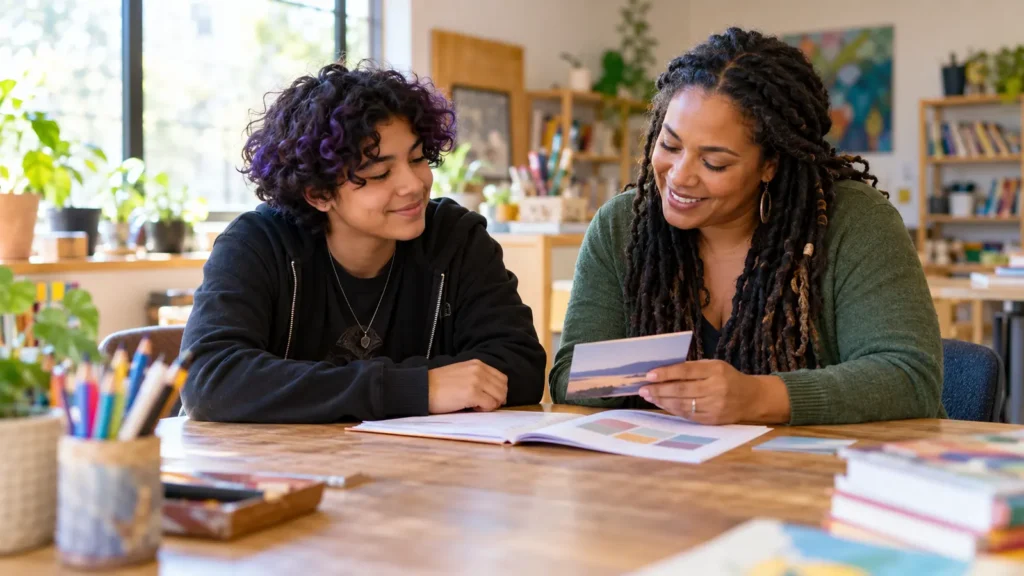
Why Donors Should Think Beyond Crisis
The youth mental health need is real. In the CDC’s 2023 Youth Risk Behavior Survey, 39.7% of high school students reported persistent sadness or hopelessness, 28.5% reported poor mental health, 20.4% seriously considered attempting suicide, and 9.5% attempted suicide. The same report found that supportive factors, including school connectedness, sleep, physical activity, adult support for basic needs, and team participation, were linked with lower mental health and suicide-risk indicators (CDC).
Those numbers should move donors, but they should not push donors toward fear-based giving. Instead, they point toward a steadier strategy: fund the community conditions that protect youth while also respecting the role of professional care. A young person may need counseling, yet still struggle if they are hungry, isolated, unsafe, or disconnected from school. Likewise, a strong mentor or enrichment program cannot replace therapy, but it can reduce stigma, notice concerns earlier, and help youth stay connected to support.
Mental Health Community Support Is a Protective Factor
The U.S. Surgeon General’s youth mental health advisory names systemic change as essential and says the institutions around young people, including schools, community organizations, health systems, funders, and government, all have a role in supporting youth mental health. It also recommends safe and affirming educational and community settings, social and emotional learning, and a continuum of supports for children and youth (U.S. Surgeon General).
In plain language, that means donors can help build a wider circle of care. Community support may look like a youth program that knows how to make referrals, a scholarship pathway that reduces stress, an enrichment activity that creates belonging, or a partner network that helps a family find food, transportation, tutoring, or a trusted adult. None of those supports require donors to become clinicians. However, each one can make clinical care more reachable and daily life more stable.

What This Means for Believe in Me’s Five Pillars
Believe in Me’s Community Support pillar is especially relevant here because mental health is shaped by more than diagnosis. The organization’s Community Support work fits alongside safety, love and belonging, education, and enrichment. Together, those pillars help create the environment where self-confidence can take root.
For donors, this is a useful lens. A gift that supports enrichment may also support mental health because joy, movement, creativity, and peer connection matter. A gift that supports education may also support mental health because tutoring can reduce shame and school stress. A gift that strengthens community partnerships may also support mental health because families often need a trusted doorway before they ask for deeper help.
Therefore, mental health community support is not a narrow program category. It is a way of designing youth support so that the young person is seen as whole.
How Donors Can Evaluate Mental Health-Aligned Giving
First, look for dignity. Strong youth programs do not turn pain into a fundraising prop. They explain need clearly, protect privacy, and tell stories with care.
Next, look for connection. Does the program help youth build relationships with adults and peers? Does it strengthen belonging at school, in community, or in a structured activity? Because connectedness is a protective factor, donors should ask how programs create steady, welcoming environments.
Then, look for referral readiness. Community programs do not need to provide every service directly. However, they should know when a concern needs a different level of care and how to connect youth or families with appropriate support. For immediate emotional support or suicide crisis help, the 988 Suicide & Crisis Lifeline is available by call, text, or chat 24/7.
Finally, look for stewardship. Donor relations are strongest when supporters understand what their gift made possible, what partners learned, and what needs remain. AFP’s donor relations and stewardship resources emphasize the importance of meaningful donor conversations and evidence of impact (AFP).

What a Gift Can Make Possible
A mental health-aligned gift may help a young person enter a safe program space after school. It may help a partner train staff to recognize distress and respond calmly. It may help provide transportation, meals, supplies, mentoring, scholarship support, or enrichment fees so a young person can participate without another barrier.
Most importantly, a gift can help shift the question from “What is wrong with this kid?” to “What support would help this kid feel safe enough to grow?” That shift matters. Marginalized youth are often asked to be resilient while carrying barriers they did not create. Donor-funded community support can place more of the burden where it belongs: on adults, systems, partners, and communities that can make life less isolating.
As fall donor cultivation begins, Believe in Me invites supporters to think about mental health as part of youth empowerment, not separate from it. Make a gift, start a recurring donation, or ask about planned giving. The next step does not have to be complicated. It simply needs to move more support closer to kids.
Frequently Asked Questions
Mental health community support means the everyday relationships, programs, referrals, and stable environments that protect youth wellbeing. It does not replace clinical care, but it can help youth feel safe, connected, and ready to ask for help.
Both matter. Clinical care is essential when youth need professional treatment. Community support helps reduce isolation, meet basic needs, build belonging, and connect youth to care earlier.
The Five Pillars of Caring address safety, love and belonging, community support, education, and enrichment. These conditions can protect mental health because they strengthen stability, connection, and self-confidence.
Yes. Useful indicators include participation, referrals made, school connectedness, attendance, partner feedback, youth confidence, and stewardship stories that respect privacy and dignity.
If someone may be in immediate danger or needs urgent emotional support, call or text 988 or use the 988 Lifeline chat. Community programs should always know how to connect youth and families to urgent help.
About the Author
Julie Wukelic, MBA, is the Chief Change Maker at Believe in Me Foundation for Kids. She helps align strategy, technology, and community partnerships so trusted nonprofits can expand opportunities for marginalized youth to learn, belong, build confidence, and have fun.