
Who Gets a Say? Bringing Youth Voices Into Community Giving

Youth voice means young people help shape choices that affect their lives. In community giving, that can mean naming needs, reviewing ideas, or helping choose which projects get funds. A strong process explains their role, supports their time, and shows what changed because they took part.
For donors and nonprofit leaders, the first step is a simple question: who helped choose this goal? A gift may pay for a useful service. Yet young people may see a gap that adults have missed.
Martin Luther King Jr. Day falls on January 19 in 2026. Its national day of service tradition invites us to think about how we serve. Listening before we choose a project can be part of that work.
What youth voice can change
Young people know parts of their day that a grant form may miss. For example, a free activity may end after the last bus leaves. A quiet study room may feel welcoming, but its hours may clash with school.
Adults bring skills and resources. Young people bring views shaped by daily life. Together, they can ask better questions before a group spends its funds.
Youth.gov describes meaningful youth engagement as a partnership in decisions. It also notes that the right level of involvement depends on the purpose and support available. There is no single model for every group.
However, the role should be real. Asking for views after all choices are final leaves little room to act on what people say.
Name the decision before asking for input
First, explain which choice is open. Is the group picking a project, setting grant goals, or checking how a service works? Then explain who will make the final decision.
These roles can look different:
- Share advice. Young people offer ideas, and staff explain how they use them.
- Plan together. Youth and adults compare options and shape the next steps.
- Choose within a clear budget. A youth group helps decide which eligible projects receive funds.
Each role needs plain rules. For example, a group might have funds for supplies but not for a new building. Say that at the start. Also, explain any safety rules and what will happen if the group cannot agree.
The Youth Leadership Institute’s youth-led giving approach offers an example of young people taking part in funding choices. Its work shows that youth can help plan and budget for projects, as well as suggest ideas.
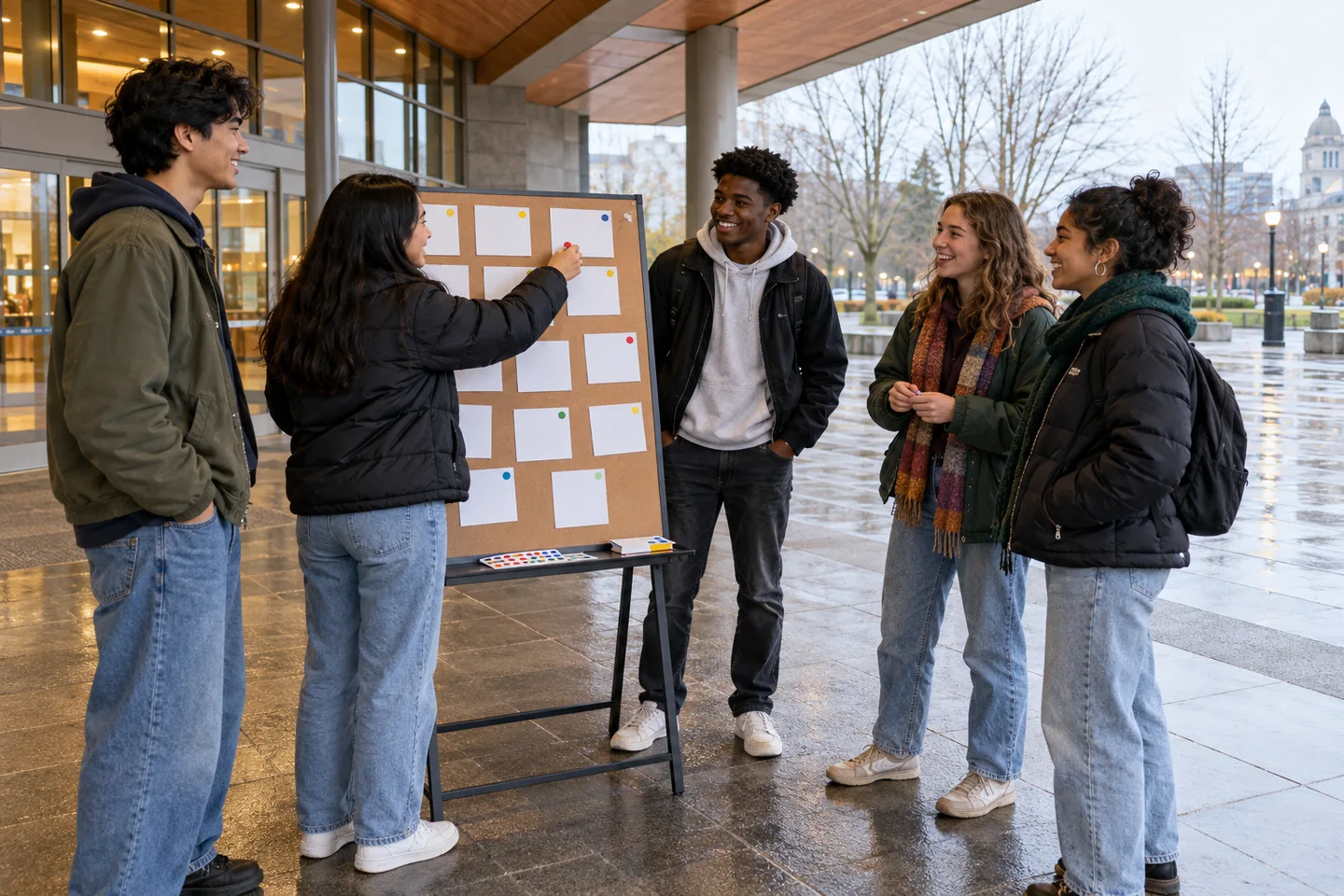
Make youth voice easier to share
A meeting invitation is only a start. Next, ask what would make it easier to join. A young person may need a ride, an online option, a quiet space, or a different time.
Also, offer more than one way to speak. Some people like group talks. Others prefer a short form, a drawing, or a private chat. Give everyone time to read the choices before asking for an answer.
No one teen can speak for all young people. Instead, reach beyond the same familiar group. Ask who is missing and which barriers may keep them away. Then work with trusted local partners to widen the invitation.
Our guide to planning for school snow closures shows how meals, travel, and clear messages can affect access. Those same everyday needs matter when young people join a planning group.
Respect time, skills, and privacy
Young people may be doing real work when they read plans, join meetings, or review grant ideas. Budget for that time. Also, explain the pay, timing, and covered costs before the work begins.
Chapin Hall’s research on youth engagement highlights fair pay, needed support, respect, clear communication, and strong working relationships. These are useful questions for donors to bring to a funding talk.
In practice, support might include transit costs, food during a meeting, or help using a new tool. Ask what is needed rather than making people guess what they may request.
Above all, a young person should not have to share a painful story to earn a seat. Let them choose what to share. Keep private details out of public notes, and seek clear permission before using a name, photo, or quote.

Show where youth voice led to action
After the meeting, close the loop. Share what the group heard, what it decided, and why. Then give a date for the next update. Even a short reply can show that the work mattered.
Consider this made-up example. A youth center plans to buy new game equipment. Young people explain that they like the games they have, but cannot stay late enough to use them. Staff check the schedule and find a way to test different hours.
In that example, the next step is not a claim of success. It is a test. The group can ask whether more young people can attend and whether the new hours work for staff.
If an idea cannot move forward, explain the reason. Then ask whether a smaller change might help. Honest follow-up gives youth a clearer role than a thank-you message alone.
Five youth voice questions donors can ask
A donor does not need to run the whole process. Instead, a few clear questions can reveal how a nonprofit shares decisions:
- Which choices can young people change? Ask for a clear example of their role.
- Who can take part? Look at how the group reaches youth beyond its usual leaders.
- What support is in the budget? Ask about time, travel, food, and access needs.
- What happens after feedback? Find out who replies and when.
- What has changed? Ask for a small, specific example and what the group learned.
Also, leave room for an honest answer. A nonprofit may be building its process. Flexible support can help it take the next step without making a promise it cannot keep.
Connect giving with the whole child
Believe in Me’s Five Pillars of Caring include Love & Belonging, Basic Human Needs, Education, Community Support, and Enrichment. They offer a way to think about more than one part of a child’s life.
For example, a question about an activity may reveal a need for food or a safe ride. Meanwhile, a question about a space may reveal what helps a child feel welcome. Our article on community support and youth empowerment explores that wider view.
Start by asking a youth-serving organization how young people help shape its goals. You can also support Believe in Me’s youth empowerment work. Listening, clear roles, and follow-through can make community giving more responsive to the people it aims to serve.
Youth voice: common questions
What is youth voice in community giving?
It means young people help shape needs, plans, or funding choices that affect them. Their role should be clear from the start. Youth.gov’s guide to involving youth describes several ways to build that partnership.
Do young people have to control every funding decision?
No. Roles can range from giving advice to sharing grant decisions. First, explain what is open to change and who has the final say. The Youth Leadership Institute’s giving approach offers one model with a strong youth role.
Should a nonprofit pay youth advisors?
Plan to pay for their work and discuss costs before it begins. Also, explain when and how payment will arrive. Chapin Hall’s research identifies fair pay and practical support as parts of meaningful youth engagement.
How can a small nonprofit begin?
Start with one real choice, such as a program time or an activity budget. Then invite input, explain the limits, and report back. Consider everyday barriers, too; our family backup planning guide highlights why care, meals, and travel matter.
What can donors ask Believe in Me about youth needs?
Ask how the Five Pillars of Caring guide its work and how it learns about the needs of young people. Then ask how your support can help. A thoughtful question can start a useful conversation without assuming a specific advisory program exists.
Images are original AI-generated illustrations.